
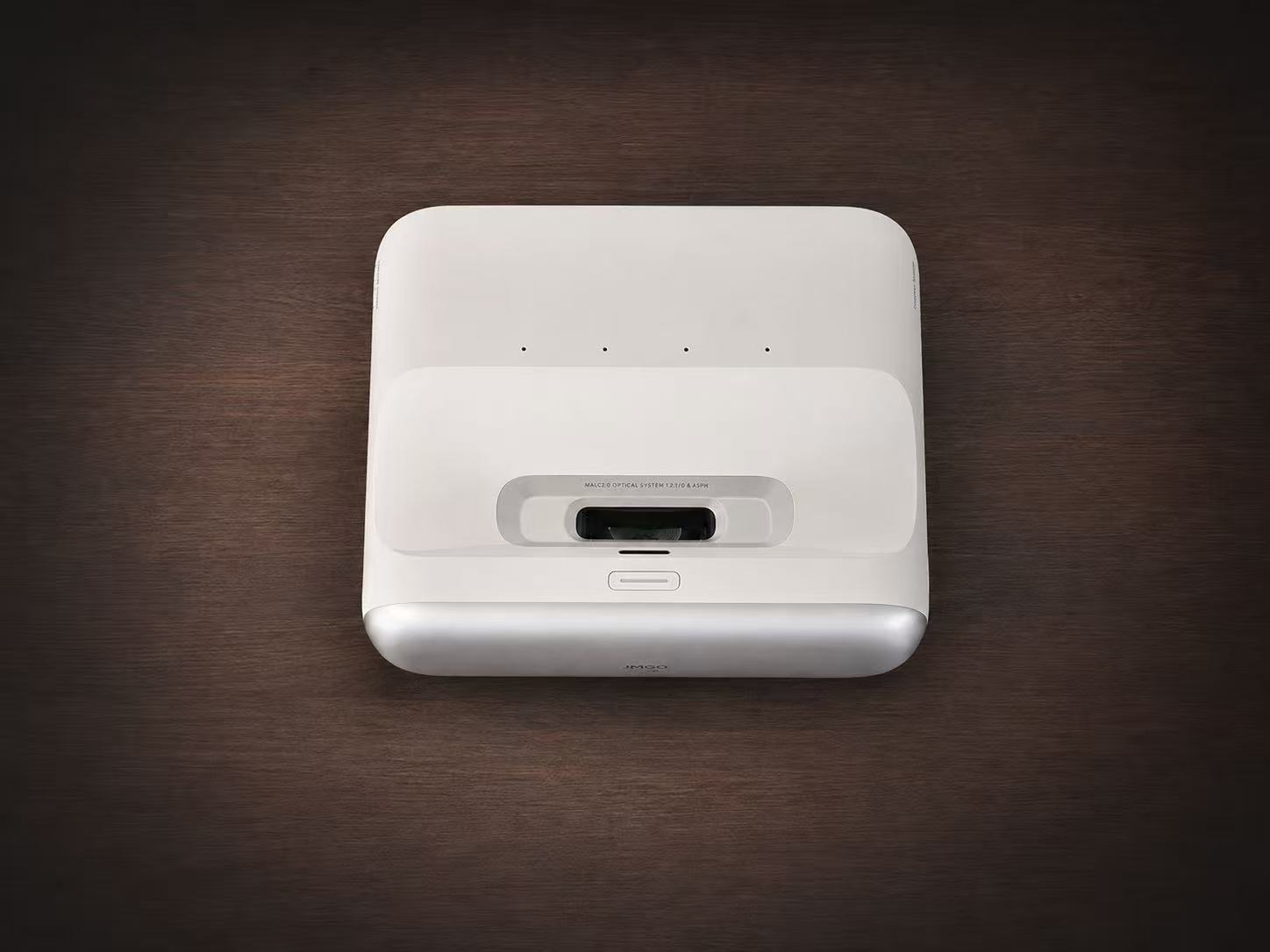
One of my
favourite buys.
The JMGO O2S Ultra has become one of my favourite purchases because it does something difficult: it combines a clean, compact design with an image large enough to transform the feeling of an entire room.
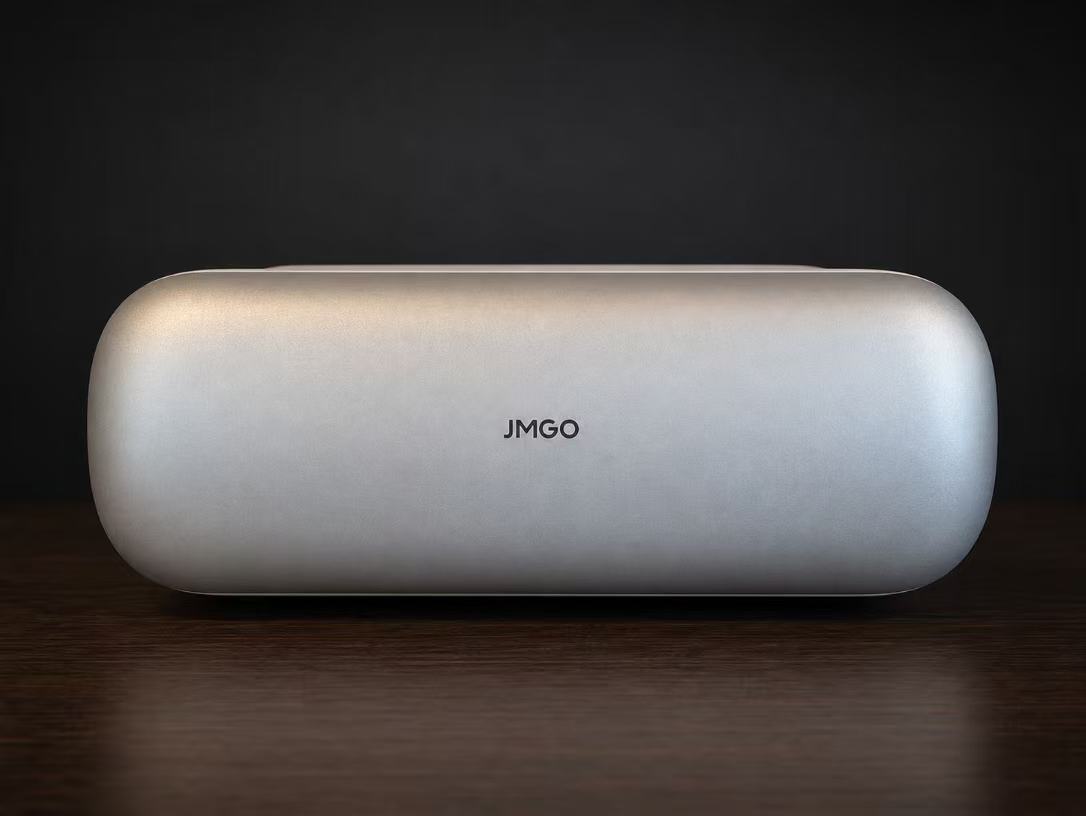
The housing is smooth and minimal, with rounded edges and a white-and-silver finish that looks far more like carefully designed home technology than a traditional office projector. Its compact body measures about 312 by 290 by 140 millimetres and weighs 4.5 kilograms, so it can sit on a normal cabinet without taking over the room.
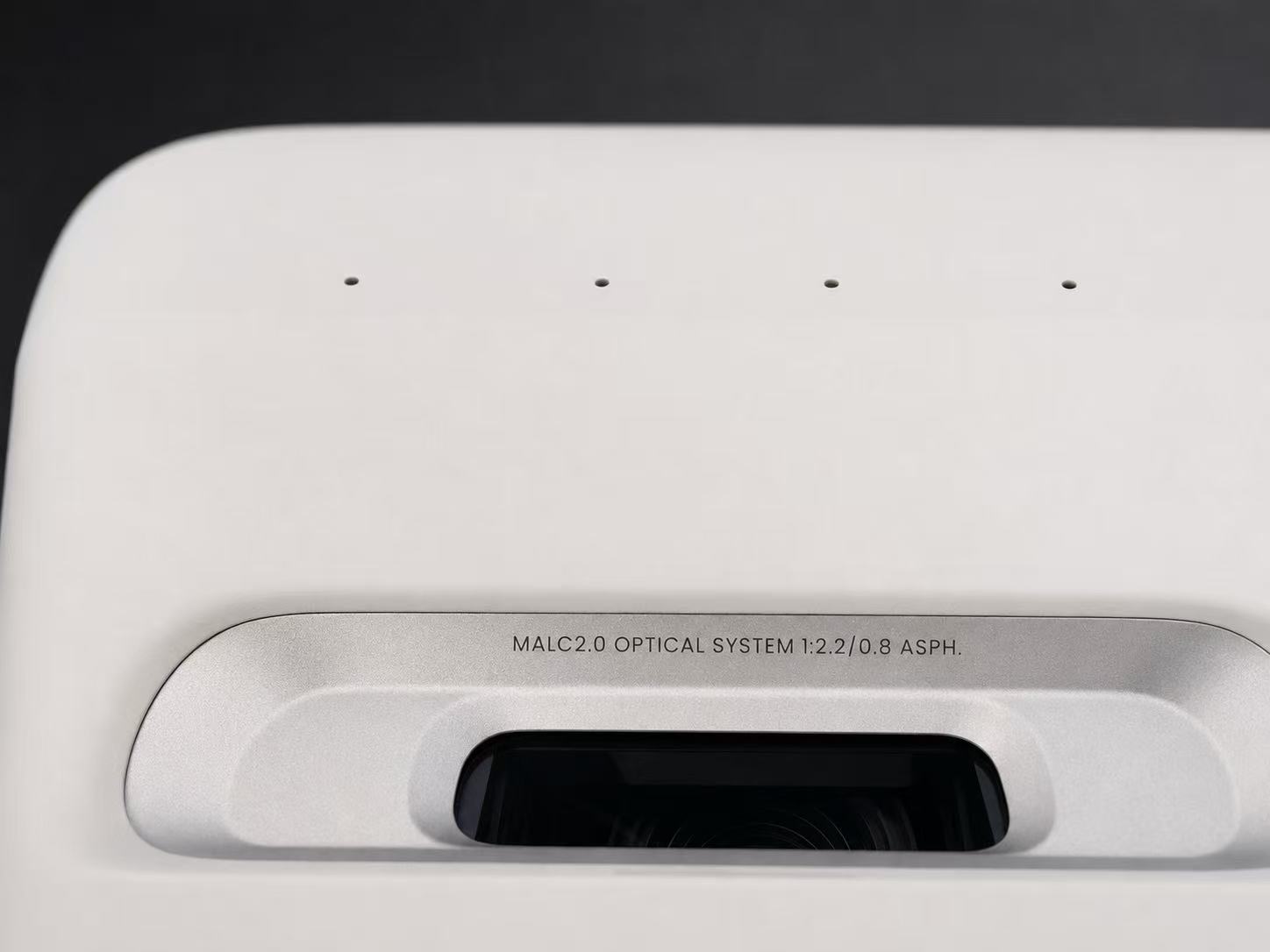
That small body hides a serious cinema system. The O2S Ultra uses a MALC RGB pure triple-laser light source, 4K DLP projection and a very short 0.16:1 throw ratio. JMGO says it can create a 100-inch picture while sitting only around 6.6 inches—or 16.8 centimetres—from the wall. In my experience, the promise of a genuinely huge picture is real.
The O2S Ultra does not feel like a television replacement. It feels like the wall has disappeared and become a cinema.
When I watch a film, the first thing I notice is detail. Faces do not look flat or soft: I can see the small textures and expressions on an actor’s face, which makes close-up scenes feel much more convincing. The 4K resolution, 3600 ISO-lumen brightness rating and 4000:1 FOFO contrast give the image a sharp, bright presentation, while the RGB laser system helps colours feel rich instead of washed out.
The projector supports images from 80 to 150 inches, so the advertised 100-inch experience is not its limit. Of course, a massive image is only impressive when it remains clear. The JMGO keeps enough detail at that scale that films feel cinematic rather than merely enlarged.
Setup is also less intimidating than it looks. Instant autofocus and automatic keystone correction help straighten and sharpen the image, while smart eye protection is designed to react when somebody moves near the laser path. Google TV with native Netflix means the projector already behaves like a smart television, with streaming apps available without adding another box.
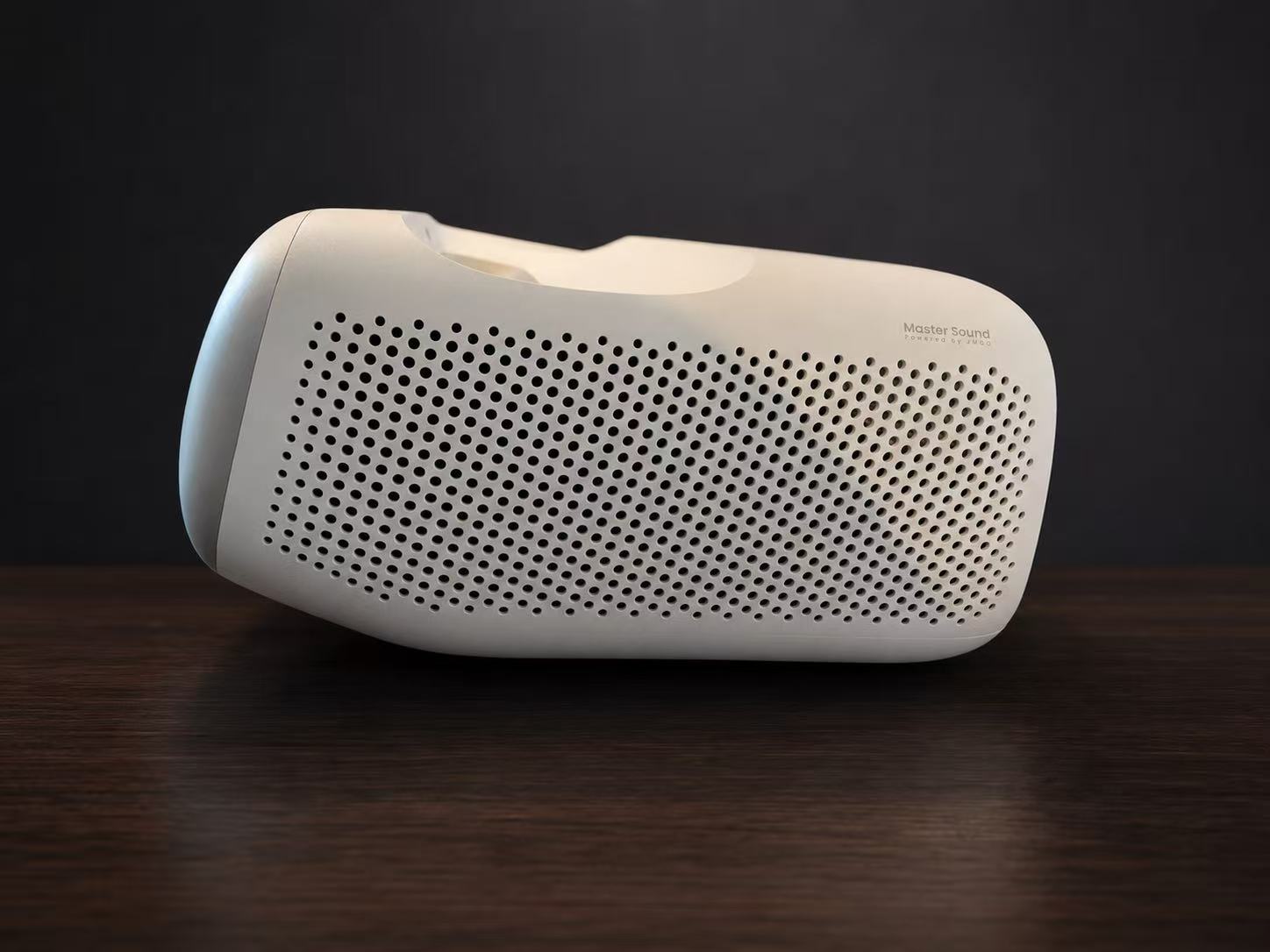
Then there is the sound. The casing simply says “Master Sound powered by JMGO,” but the official specification identifies a 2×10W Dynaudio system. Whatever name is printed on it, the result surprised me. It feels as though I have a separate Harman Kardon-style speaker directly in front of me: dialogue has body, music fills the room and effects sound much larger than I expected from something this compact.
The best demonstration was Gran Turismo 7. With a wall-sized image, the cockpit filled so much of my vision that I stopped feeling as though I was controlling a small car on a screen. Combined with the built-in sound, speed, engine noise and the view through the windscreen became genuinely immersive. For a moment, it felt like I was sitting inside the car.
There are practical strengths too: two HDMI 2.1 inputs—including one with eARC—make it easier to connect a console and audio equipment, while Wi-Fi 6 and Bluetooth 5.2 cover wireless use. JMGO rates operating noise below 26dB, which helps quiet film scenes remain focused on the movie instead of the cooling fan.
It is not perfect. Ultra-short-throw projectors are sensitive to the surface and positioning: a slightly uneven wall can reveal waves or distortion, and the best daylight performance usually comes with a suitable ALR screen. The built-in audio is excellent for its size, but a serious surround system can still create a wider soundstage. Brightness figures from different brands may also use different measurement standards, so numbers alone do not decide the winner.
Even with those limits, the O2S Ultra succeeds because its design, huge picture, sharp facial detail, smart platform and satisfying audio all work together. It is not just a projector with impressive specifications. It changes movie night and makes gaming feel like an event.
The Cave score is 9.0. If you want a compact ultra-short-throw projector that can create a genuine 100-inch 4K experience without turning the room into a complicated cinema installation, the JMGO O2S Ultra deserves serious attention.
COMMENTS / 0
Be honest. Be specific. Never attack the person.